 +20 114 616 2847
What are the Islamic sacred months, and why are they called that?
Published
Islamic sacred months are more than just names on the Hijri calendar—they are special seasons of peace ...
Q.Which months are considered sacred in Islam?
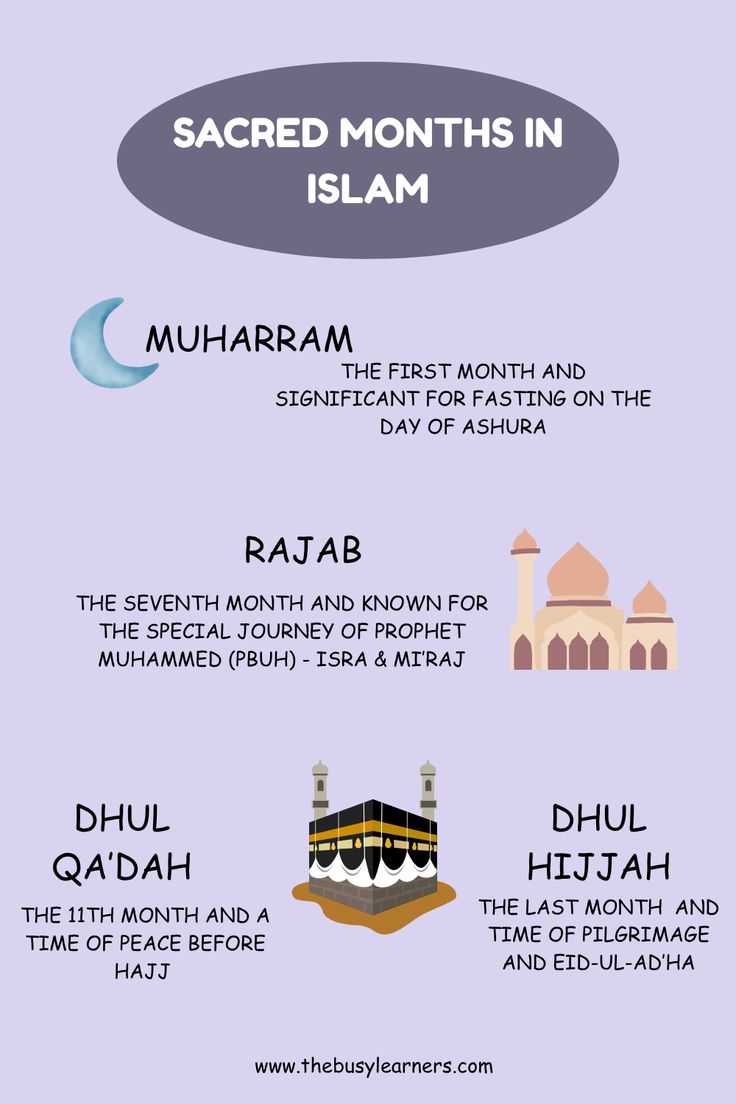
The four sacred months are: Dhul-Qi'dah, Dhul-Hijjah, Muharram, and Rajab. Allah states in the Quran: 'Indeed, the number of months with Allah is twelve... of these, four are sacred' (Quran 9:36). The Prophet (ﷺ) specified them in Sahih al-Bukhari (3197).
Q.Why are these months called 'sacred'?
They hold special sanctity because Allah: 1) Prohibited warfare during them (even in pre-Islamic times), 2) Made sins more serious and good deeds more rewarded, and 3) Designated them for spiritual focus as stated in Quran 9:36: 'So do not wrong yourselves during them.'
Q.What makes Dhul-Hijjah unique among sacred months?
Dhul-Hijjah contains Hajj (the 5th pillar of Islam) and Eid al-Adha. The Prophet (ﷺ) said: 'There are no days on which righteous deeds are more beloved to Allah than these ten days' (first ten days of Dhul-Hijjah) - Sahih al-Bukhari 969.
Q.How should Muslims observe Muharram?
1) Fasting on Ashura (10th Muharram) which expiates past year's sins (Sahih Muslim 1162), 2) Reflecting on the sacrifice of Imam Hussain, and 3) Starting the Islamic year with repentance. The Prophet (ﷺ) called it 'The Month of Allah' showing its sanctity.
Q.What is the significance of Rajab?
Rajab marks spiritual preparation for Ramadan and is associated with Isra & Mi'raj. While no specific rituals are mandated, the Prophet's companions often fasted voluntarily during it to draw closer to Allah.
Q.Are there prohibited actions during sacred months?
All forms of injustice are especially forbidden. The Quran's command 'do not wrong yourselves' (9:36) applies to: 1) Physical violence, 2) Verbal abuse, 3) Neglecting worship, and 4) Social conflicts - making these months a time for peace.
Q.How do sacred months affect worship rewards?
Good deeds are multiplied, particularly: 1) Fasting (especially in Muharram - Sahih Muslim 1163), 2) Charity, 3) Quran recitation, and 4) Dhikr. Sins also carry greater weight during these months.
Q.Did pre-Islamic Arabs honor these months?
Yes, tribes would cease wars during sacred months for safe trade and travel. Islam preserved this tradition but elevated it from cultural practice to divine commandment with spiritual purpose.
Q.Can I make up missed fasts in sacred months?
Yes, and it's highly recommended. The Prophet (ﷺ) emphasized: 'The best fast after Ramadan is in Muharram' (Sahih Muslim 1163), making these months ideal for compensating missed obligations.
Q.How can children learn about sacred months?
1) Marking them on Islamic calendars, 2) Sharing stories of associated events (e.g., Hajj, Ashura), 3) Encouraging good deeds like charity, and 4) Explaining their historical continuity from Prophet Ibrahim's time.