 +20 150 858 6055

A guide for US families and adult learners
Learn Quran Online in the USA: A Complete Guide for Families
Learning the Quran online can be simpler than it looks, but only if the goal, the teacher and the weekly routine are chosen deliberately. This guide explains the difference between reading, Tajweed and memorization, how to judge a teacher’s credentials, how to build a study plan around a US schedule, and what realistic progress looks like. It is written for parents, adults starting from zero, and converts who want a clear path rather than a pile of links.
- Understand the three core Quran skills and how they fit together
- Ask the right questions before choosing a teacher
- Build a weekly routine that survives a busy US household
- See how kids, adults and converts can start at different points
- Know what progress should feel like at each stage
+20 114 616 2847No credit card required for the trial

First steps
Where to start when you want to learn Quran online
The first decision is not which app to download or which teacher to follow. It is deciding what “learn the Quran” means for you or your child right now. That answer changes the method, the schedule and the teacher you need.
Most new students fall into one of three groups. The first group has never read Arabic and needs to start with the alphabet, letter forms and vowel sounds. The second group can read the script but has never been taught the rules of Tajweed, or learned them informally and wants to correct habits. The third group has memorized portions in the past, or reads fluently, and wants to strengthen retention, improve recitation or begin a structured memorization plan.
Each group needs a different starting point. A complete beginner should not be handed a page of Quran text and told to imitate; the letters need to be introduced first. A fluent reader should not be sent back to the alphabet simply because they have not studied formally. A returning learner may need a short revision phase before anything new. The assessment at the start of a good programme exists to sort this out.
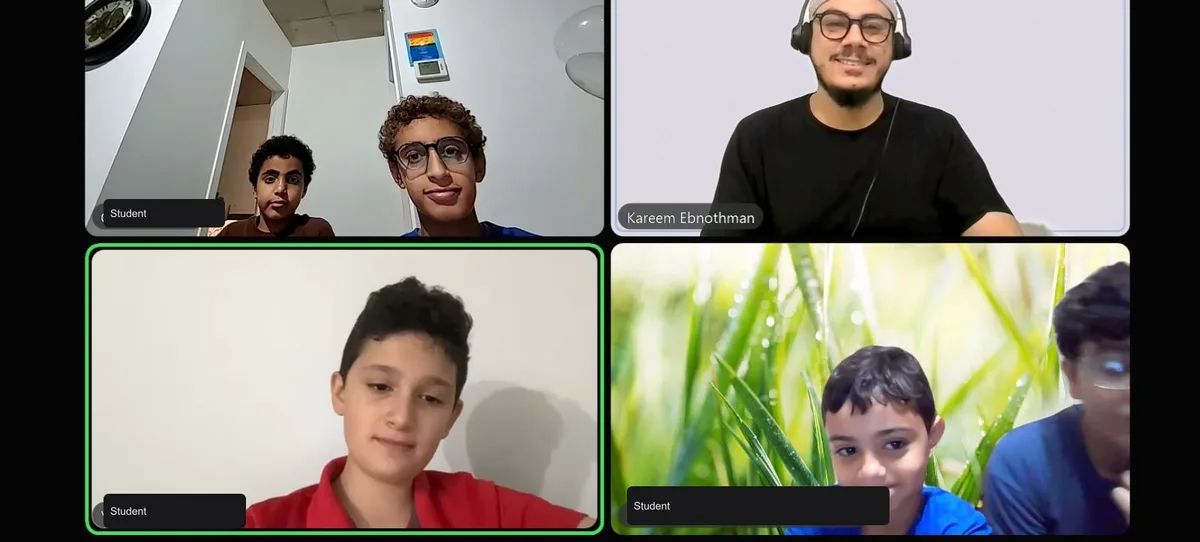
Write down three things before you book anything
- The goal: read Arabic, recite accurately, memorize a portion, understand the meaning, or a combination.
- The available time: how many days a week, how many minutes, and which times are realistic rather than aspirational.
- The preferred language of instruction: English, Arabic, or a mix, especially for a child or a convert.
These three answers are more useful than a long list of preferences. A family that says “we want our eight-year-old to read fluently and we can do two short lessons a week, mostly in English” has given a teacher enough to build a plan. A family that says “we want Quran” has not yet made the decisions that determine success.
Choose one teacher and one method
A common beginner mistake is collecting resources: three apps, five YouTube channels, a stack of workbooks and a rotating set of teachers. Each resource may be good, but together they create conflicting instructions. One teacher who can hear the student, correct in real time and adjust the plan is more valuable than a large library.
That does not mean you cannot use supporting material. A teacher may recommend a specific Qaida, a recitation to listen to, or a short daily drill. The difference is that the material supports a single plan rather than replacing it.
Start smaller than feels ambitious
A beginner who commits to five lessons a week often lasts two weeks. A beginner who commits to two lessons and ten minutes of daily practice often lasts a year. The first month is about building the habit, not proving how much can be covered. Once the routine is stable, the load can increase.
For a child, “small” may mean one lesson a week plus a parent reading aloud for five minutes on other days. For an adult, it may mean one lesson on the weekend and listening to a recitation during the commute. The exact numbers matter less than the consistency.
The three skills
Quran reading vs Tajweed vs memorization: what is the difference?
Reading, Tajweed and memorization are related, but they are not the same skill. A student can read fluently and still recite with errors. A student can memorize a passage and still struggle to read a new page. Knowing the difference helps you choose the right programme and judge progress honestly.
Quran reading: decoding the script
Reading is the ability to look at Arabic text and produce the correct letters, vowel sounds and word boundaries. For a beginner, this starts with recognising letter forms, then joining letters, then reading short vowels, then longer words and eventually full sentences. A phonics-based method such as Noor Al-Bayan is often used because it builds the skill in a deliberate sequence rather than asking the student to memorize whole words by sight.
Reading also includes the marks that tell the reader where to stop and continue. A student who knows every letter but pauses in the middle of a phrase has not yet mastered reading for Quranic purposes. Fluent reading is the foundation for everything else, which is why it usually comes first.
A good reading lesson sounds like this: the student reads aloud, the teacher stops them at a specific letter, demonstrates the correct sound, and asks them to repeat the word in context. The teacher is not only checking whether the word was guessed correctly; they are checking whether the student can produce the sound reliably on a new word.
Tajweed: reciting correctly and beautifully
Tajweed is the set of rules that govern how the Quran is recited. It covers articulation points (makharij), the characteristics of letters (sifat), and rules for how letters interact, such as when a nasal sound is held, when a letter is merged, and how long a vowel is stretched. Tajweed is not decoration added after reading; it is part of reciting the text correctly.
A student can begin Tajweed once they can read words without excessive effort. The rules are easier to apply when the student is not simultaneously decoding every letter. Some teachers introduce Tajweed gradually alongside reading, starting with the sounds that matter most and adding rules as the student’s reading stabilises.
Tajweed is learned by ear as much as by rule. A teacher demonstrates a sound, the student imitates, and the teacher corrects. Reading a rule in a book is not the same as producing it. This is why live correction matters: a recording cannot tell the student that their ghunnah is too short or their qalqalah is too heavy.
Memorization: keeping what you have learned
Memorization (Hifz) is a separate skill with its own routine. A typical Hifz lesson divides the work into three parts: the new portion (sabaq), the recent portion (sabqi), and the older revision (manzil). A student who only memorizes new material and never revises will watch earlier portions fade. A student who only revises will stop moving forward.
Memorization is easier when reading and Tajweed are already stable. If a student memorizes a passage with a pronunciation error, the error becomes part of the memory and is harder to correct later. For a young child, short surahs learned by listening can come first, with formal Hifz added once reading is secure.
Which order should a beginner follow?
| Student profile | Usually starts with | Then adds |
|---|---|---|
| Never read Arabic | Letters, sounds and short words (reading) | Tajweed basics and short memorization |
| Reads but wants to recite correctly | Assessment of current recitation | Applied Tajweed and regular correction |
| Reads well and wants to memorize | A revision and memorization plan | Tajweed refinement and longer portions |
| Wants to understand the Quran | Reading and Arabic | Vocabulary, grammar and Tafsir study |
Arabic and Islamic studies can run alongside Quran work. Arabic helps a student understand what they are reciting; Islamic studies gives context for the passages. Neither is a prerequisite for reading, but both make the learning more meaningful over time. The academy’s programme pages describe each track:
Timelines
How long does it take to learn Quran online?
This is the most common question from new students, and the most common place for marketing to become dishonest. There is no single timeline that applies to everyone. A realistic answer depends on the starting point, the goal, the weekly time, the quality of practice and the student’s age.
A student who practises ten minutes a day and attends two lessons a week will progress differently from a student who attends one lesson a week and practises only during the lesson. A child learning to decode letters is working on a different skill from an adult refining Tajweed. A student memorizing a short surah is working on a smaller scope than a student memorizing a full Juz.
This is why Nebras Academy does not publish a fixed promise such as “read Arabic in eight weeks” or “memorize the Quran in a year.” A timeline without assumptions is not a plan; it is a sales line. The teacher can give a more useful estimate after the assessment, once the student’s starting point and available practice time are known.
The factors that actually change the timeline
| Factor | Why it matters |
|---|---|
| Starting point | A complete beginner and a returning reader need different plans even if they share a goal. |
| Goal | Reading a page, reciting with Tajweed and memorizing a Juz are different projects. |
| Weekly lesson time | More lessons can help, but only if the student has time to practise between them. |
| Daily practice | Short, regular practice usually beats one long session before the lesson. |
| Age and attention span | Younger children need shorter practice and more variety. |
| Teacher fit | A teacher who explains in a way the student understands saves time. |
| Revision habits | Memorized material fades without a revision routine. |
Signs of progress that do not depend on a deadline
Instead of counting weeks, look for changes in what the student can do. A beginner is making progress when they recognise letters without prompting, read a new word correctly, or hear a mistake in their own recitation. A Tajweed student is making progress when a rule they learned last month appears correctly in a new passage without being reminded.
A memorization student is making progress when the new portion is recalled accurately after a night’s sleep, and when older portions still surface with minimal prompting. These signs are more reliable than a page count, because they show that the skill is transferring to new material.
Ask for milestones, not guarantees
A good teacher will say something like: “If you practise ten minutes on the days between lessons, we should be able to finish the letter section and begin joined words by the end of the month. We will review that estimate after two weeks.” That is a milestone with an assumption attached. It can be checked and revised.
A teacher who promises a fixed result regardless of practice is either guessing or overselling. The honest version is more useful: it tells the family what the plan depends on and gives them a way to tell whether it is working.
What to ask after the assessment
Once the teacher has heard the student, ask for three things: the next milestone, the practice habit it assumes, and the date you will review it together. A milestone should describe an observable skill rather than a page count. “Read a three-letter word with short vowels without prompting” is observable. “Finish the Qaida” is not, because two students can finish the same book with very different levels of fluency.
Write the milestone down and revisit it at the agreed review point. If the student has met it, the plan moves forward. If not, the teacher and family can ask why: was the practice realistic, was the material too difficult, was the schedule interrupted? A missed milestone is information, not a verdict on the student. This review habit is more valuable than any published estimate, because it keeps the plan honest as the student changes.
Due diligence
How to choose an online Quran teacher
A teacher is the most important variable in online Quran learning. The platform, the workbook and the schedule matter, but none of them can compensate for a teacher who cannot hear the student’s errors or explain the correction. Here is a practical checklist for evaluating a teacher before you pay.
The credential checklist
| What to check | Why it matters |
|---|---|
| Ijazah in a named narration | An Ijazah is an authorization to teach, not a generic attendance certificate. |
| The authorizing teacher’s name | A named authorizer makes the claim checkable. |
| A connected Sanad | The chain shows the recitation has been transmitted, not improvised. |
| Formal study, if relevant | An Al-Azhar degree or similar indicates broader training, but it is not the only valid path. |
| Experience with the student’s age group | Teaching a five-year-old and teaching an adult require different skills. |
| Comfort in the family’s language | A teacher who can explain in English helps beginners avoid confusion. |
| A trial lesson | The trial shows how the teacher corrects, not just what they claim. |
The first three items are the core. A teacher should be able to tell you which narration they are authorized in, who authorized them and, if asked, show the document. If the answer is vague, ask again. “I have a certificate” is not the same as “I hold an Ijazah in Hafs ‘an ‘Asim, authorized by a named teacher.”
The academy publishes this information for its teachers on the Teachers page, including the Ijazah documents and the authorizing teacher’s title. Families should still ask questions in the trial; a published document is a starting point for a conversation, not a substitute for one.
Questions to ask in the trial lesson
- Which narration are you authorized to teach, and who authorized you?
- How do you assess a new student, and what would our first month look like?
- How do you correct a student who keeps making the same mistake?
- How much practice do you expect between lessons, and how do you adjust it for a child?
- How do you share feedback with the parent or adult student?
- What do you do if a student is frustrated or losing confidence?
- Which materials do you recommend, and are they included?
- What is your policy on missed lessons and rescheduling?
The answers matter more than the polish. A teacher who says “I would need to hear the student read before I promise anything” is being honest. A teacher who promises fluency in a fixed number of weeks before hearing the student is selling, not teaching.
Red flags
- No named narration, no authorizing teacher and no willingness to show a document.
- Pressure to pay for a long package before a trial or assessment.
- Guaranteed results with no discussion of practice time or starting level.
- Refusal to answer questions about method or to let a parent observe a child’s lesson.
- No written policy on cancellations, rescheduling or refunds.
- Unusual payment requests, such as direct transfers to a personal account with no receipt.
- A teaching style that consists only of the student reading while the teacher says “again” without explaining why.
None of these automatically means a teacher is dishonest. But each one is a reason to slow down and ask for clarity. A legitimate teacher or academy should be comfortable with a family doing basic due diligence.
One-on-one or small group?
One-on-one lessons give the student the full attention of the teacher. They suit beginners who need constant correction, students preparing for a specific goal, and anyone who feels self-conscious in a group. Small groups cost less per student and can provide companionship, but the lesson moves at the group’s pace and individual correction is shared.
For siblings at a similar level, a small group can work well. For a child who is far ahead or behind a sibling, separate lessons may be kinder. The right answer depends on the student, not on a general rule.
Format
Online Quran classes vs a local mosque or community centre
For many US families, this is not a choice between a good option and a bad one. A local mosque offers community, a physical space and people who know the family. An online class offers scheduling flexibility and access to teachers who may not live nearby. The useful question is which combination fits your household.
| Consideration | Online classes | Local mosque or centre |
|---|---|---|
| Access | Available from any state, including areas without a nearby Quran programme. | Depends on distance, transport and the mosque’s timetable. |
| Scheduling | Flexible slots, including evenings and weekends across time zones. | Usually tied to fixed class times and term dates. |
| Teacher choice | A wider pool of teachers, including specialists in a narration or age group. | Limited to the teachers available locally. |
| Community | Weaker unless the family builds it separately. | Strong: neighbours, events and shared routines. |
| Supervision | A parent can sit nearby at home. | Supervision depends on the mosque’s arrangements. |
| Travel | None, which helps busy households. | Requires a weekly drive, sometimes significant. |
| Technology | Depends on internet, device and a quiet room. | No device or connection needed. |
| Cost | Varies by teacher and format; online can be more affordable per hour. | Varies; some programmes are free or subsidised. |
| Accountability | The family must protect the slot at home. | The physical setting and group routine provide structure. |
Online learning is often chosen by families who cannot make a weekly drive work, or who live in an area without a suitable programme. It is also chosen by adults who prefer to learn privately, and by students who want a teacher qualified in a specific narration. The format removes geography as a barrier.
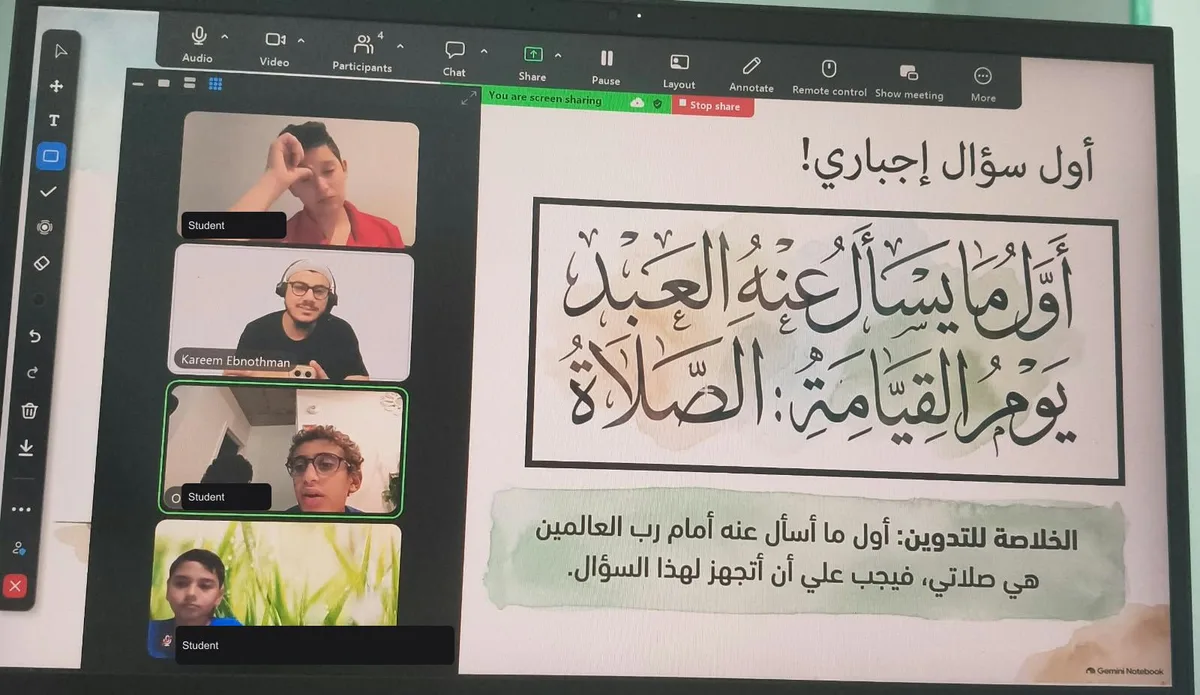
The trade-off is that the home is full of distractions. A lesson in the kitchen competes with dinner, siblings and phones. Online students need a defined space and a household that treats the lesson as a real appointment. Without that, the flexibility becomes a weakness.
A local mosque offers something online cannot easily replicate: belonging. The child sees other children learning, the family knows the teacher in person, and the mosque becomes part of the weekly rhythm. For some families, that social dimension is the main reason the learning sticks.
A hybrid approach often works best
Many families use online classes for the core skill work and the mosque for community. The online teacher provides individual correction and a plan; the mosque provides classes, events and friendships. The two are not in competition. If the local mosque offers a good programme, use it. If it does not, online fills the gap without removing the family from the community.
For a child, the combination can be especially effective: a weekly online lesson with a specialist, plus a weekend mosque class or halaqah for social contact. The parent does not have to choose one identity for the whole family.
When online is the only realistic option
Some families live far from a mosque with a Quran programme, or cannot manage the drive after work. For them, the comparison is not really online versus local; it is online versus nothing. In that situation, a live online lesson with a qualified teacher is clearly better than waiting for a local programme that may not exist. The same applies to a family that moves frequently or travels for work.
The point is to be honest about the trade-off rather than pretend there is none. Online learning can deliver strong individual instruction, but it does not automatically create community. A family that chooses it should look for community elsewhere: the mosque, a local halaqah, family study, or a group that meets for Quran and friendship. The format is a tool, not a whole religious life.
Routine
A weekly study plan for busy US families
Most families do not fail because they lack resources. They fail because the plan assumes a quiet, spacious week that never arrives. A sustainable plan is built around the week you actually have, including school runs, work, sports and the nights when everyone is tired.
The core principle is simple: short, frequent contact with the Quran is easier to sustain than a long session that happens once a week. A student who reads for ten minutes on four days and attends one lesson will usually retain more than a student who does nothing all week and then reads for an hour. The lesson is where correction happens; the days between are where the skill settles.
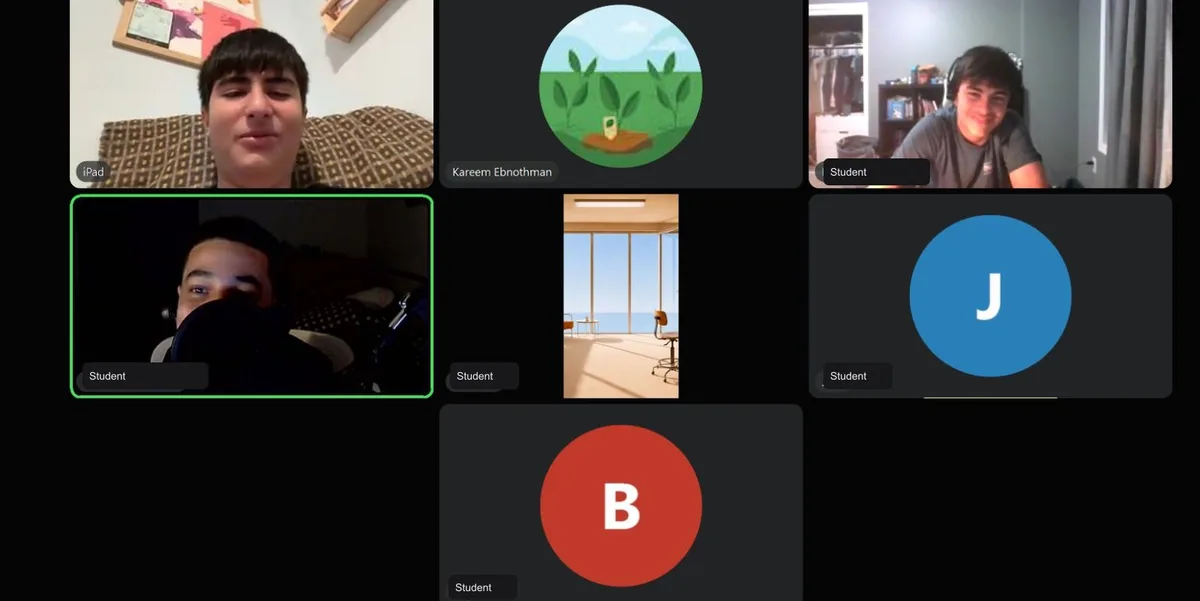
A sample week for a child
| Day | Activity | Time |
|---|---|---|
| Monday | Live lesson with the teacher | Lesson slot |
| Tuesday | Review the lesson task with a parent | 10 minutes |
| Wednesday | Listen to the assigned recitation and repeat | 10 minutes |
| Thursday | Live lesson with the teacher | Lesson slot |
| Friday | Light review or a short surah | 5–10 minutes |
| Saturday | Family practice or a mosque class | Flexible |
| Sunday | Rest or optional listening | Optional |
The parent’s role is not to teach Tajweed. It is to protect the ten minutes, sit nearby for a younger child, and help the child remember what the teacher asked. A parent who tries to correct pronunciation without training can accidentally teach a second, conflicting version. When in doubt, record a question for the teacher instead of guessing.
A sample week for an adult
| Moment | Activity |
|---|---|
| Commute or walk | Listen to the recitation assigned by the teacher |
| After Fajr or before work | Read the assigned portion aloud for 10 minutes |
| One evening or weekend slot | Live lesson |
| Before bed | Review three new words or one Tajweed rule |
An adult who travels for work can use the same pattern: listening during transit, a short reading at the hotel, and a lesson scheduled for a recurring slot at home. The plan should bend without breaking. If a week is lost, the next week resumes; it does not require a dramatic restart.
Make the routine visible
A wall calendar or a shared phone reminder can do more than a motivational speech. Mark the lesson, the practice days and the revision day. For children, a simple sticker chart can help, but avoid turning Quran practice into a competition with siblings. The goal is a habit, not a performance.
Link the practice to an existing routine: after breakfast, after school, before the evening meal, or after a specific prayer. A new habit is easier to keep when it is attached to something that already happens every day.
Adjust for Ramadan and school holidays
Ramadan changes the household rhythm. Some families increase Quran time; others struggle to keep the usual schedule. Both are normal. A teacher can adjust the plan for the month: less new material, more listening and revision, or a shorter lesson. The important thing is to decide in advance rather than let the classes quietly disappear.
School holidays can work in the opposite direction. A break from school may free up time for an intensive week or a memorization push. A family that plans the holiday around a realistic goal often gets more from it than a family that simply hopes to “do more Quran.”
Pitfalls
Common beginner mistakes, and how to avoid them
Most beginner problems are predictable. They are not signs that the student lacks ability; they are signs that the plan is fighting the way learning actually works. Recognizing the pattern early saves months of frustration.
| Mistake | What it looks like | A better approach |
|---|---|---|
| Starting too big | Five lessons a week in the first month, then nothing for a month. | Start with one or two lessons and a small daily practice. |
| Practising only in the lesson | The student improves during the class and forgets by the next one. | Ten minutes on the days between lessons; the lesson is for correction, not the whole learning. |
| Skipping listening | The student reads the letters but has never heard the passage recited well. | Listen to the assigned recitation daily, then imitate it. |
| Learning rules without applying them | The student can name a Tajweed rule but does not hear it in their own recitation. | Apply one rule at a time to real verses and ask the teacher to stop when it is missed. |
| Changing teachers too often | A new method every month; no plan survives long enough to work. | Commit to one teacher and one plan for a meaningful period, then review. |
| Memorizing without revision | New portions are strong; older portions disappear. | Build a revision cycle into every week from the start. |
| Ignoring articulation points | A letter is consistently pronounced in the wrong place, and no one stops it. | Ask the teacher to isolate the sound and practise it in words, not only in the full passage. |
| Comparing to siblings or classmates | The student feels behind and loses confidence. | Compare the student to their own last month, not to someone else. |
| Not asking questions | The student nods but does not understand why a correction was made. | Ask “why” in the lesson; a good teacher welcomes it. |
| Using random videos as a curriculum | Three apps, five channels and no sequence. | Let the teacher set the sequence; use videos only as assigned support. |
| A parent correcting without training | The child hears two different pronunciations and becomes confused. | Ask the teacher for a short parent note; do not guess at Tajweed. |
| Treating the lesson as babysitting | The child is alone with the device and disengages. | Sit nearby for younger children and protect the slot from distractions. |
For parents: support without taking over
A parent’s most useful contribution is logistical and emotional: protect the time, sit nearby, help the child find the page, and celebrate small wins. A parent’s least useful contribution is correcting pronunciation without training. If you hear something that seems wrong, note it and ask the teacher in the next lesson. The teacher can hear the child directly and explain the correction.
It also helps to avoid turning the lesson into a performance review. “What did you learn?” can feel like an exam. “Show me the part you liked” is easier to answer. A child who feels that Quran time is warm and predictable is more likely to keep going than a child who feels evaluated after every class.
For adults: lower the stakes
Adults often bring a fear of looking foolish. They may have spent years avoiding Quran classes because they cannot read as well as they think they should. A one-on-one lesson removes the audience. The teacher has heard beginners before; the student does not need to apologize for starting late.
The other adult mistake is waiting for a perfect week. There will never be a perfect week. A short practice on a busy day is still practice. The goal is to keep the connection alive until the schedule opens up again.
The mistake that matters most
If you fix only one thing, fix the gap between lessons. A student who practises for a few minutes on most days will improve even with an average teacher. A student who practises only during the lesson will plateau even with an excellent one. The teacher can correct what the student brings; the student has to bring something.
Children
Quran classes for kids, age by age
Children of different ages need different lessons, even when they are working on the same Quran. A five-year-old and a fifteen-year-old can both be beginners, but they do not learn in the same way. The academy accepts students from age five; within that range, the plan should match the child.
Age is a useful starting point, not a verdict. Two children of the same age can differ enormously in attention span, reading readiness and interest. The teacher should adjust after meeting the child, and the parent should feel free to say that a plan is too easy, too hard or simply boring.

Ages 5–7: sounds, letters and short listening
At this age, the goal is familiarity and correct sounds, not volume. A child may learn to recognise letter forms, distinguish similar letters, and repeat short surahs by listening. The lesson should be short, varied and playful. A teacher who can use repetition without making it feel like a punishment is worth more than a teacher who covers many pages.
A parent should sit nearby for most lessons at this age. The parent helps with the device, keeps the child from wandering, and learns the sounds alongside the child. Practice at home should be measured in minutes, not pages. If the child can repeat one line correctly and happily, that is a good day.
Ages 8–10: reading fluency and the first rules
By this age, many children can handle a more structured reading lesson. The focus shifts to joining letters smoothly, reading short words without guessing, and applying basic Tajweed such as holding a nasal sound or stretching a vowel correctly. Short memorization portions can be added if reading is stable.
This is also the age when a child may start to compare themselves to siblings or friends. Keep the comparisons out of the household. A child who is slower at reading may be faster at memorization, or may simply need another few months. The teacher can help set individual milestones.
Ages 11–13: independence and clear goals
Pre-teens can take more responsibility for their practice. They can keep a small notebook, follow a weekly checklist and ask the teacher questions directly. They may also want to know why a rule exists, not only how to perform it. A teacher who explains the reasoning usually gets more engagement at this age.
A clear goal helps: finishing a Juz, reading a page without prompts, or preparing to lead a short prayer. The goal should be the child’s as well as the parent’s. A plan imposed from outside may be followed for a while, but it rarely survives the first busy month.
Ages 14–17: ownership, discussion and revision
Teenagers often respond to respect and relevance. They may want to discuss what a passage means, not only recite it. They may want a teacher who treats them as an adult learner. Memorization at this age can be ambitious, but it needs a revision system; a teenager’s schedule is full, and unstructured Hifz tends to collapse under exam pressure.
This is also a good age to connect Quran study with other interests: Arabic, Tafsir, Islamic history or community leadership. A teenager who sees the Quran as part of a larger intellectual and spiritual life is more likely to continue after the parent stops scheduling the lessons.
Signs the plan needs adjustment
- The child dreads the lesson or becomes quiet before it starts.
- The same correction is repeated every week with no change.
- The practice at home consistently takes much longer than the teacher intended.
- The child can recite the material in the lesson but cannot recall it the next day.
- The child is bored because the material is too easy, or frustrated because it is too hard.
None of these mean the child is failing. They mean the plan needs a conversation. A teacher can reduce the load, change the material, add a different activity or adjust the goal. A parent should raise the issue early rather than waiting for the child to quit.
One-on-one or group for children?
One-on-one is usually better for a child who needs constant correction or feels shy. A small group can be better for a child who enjoys company and benefits from listening to peers. The group should be small enough that each child reads regularly; a group of five is the academy’s maximum, not a target. If a child spends most of the lesson waiting while others read, the group is too large for their needs.
For younger children, the academy offers a dedicated Arabic for Kids track and a Juz’ Amma memorization track. Older children may combine Quran reading with Islamic studies. The programme pages explain the scope of each:
Adult learners
Quran learning for adults and converts
Adults often assume they have missed the window. They have not. Adults bring advantages that children do not: they can set their own goals, understand explanations, and practise deliberately. The challenge is not ability; it is time, self-consciousness and the belief that it is too late to start.
Adult beginners
An adult beginner may never have learned the Arabic script, or may have learned it as a child and forgotten most of it. The first lessons are likely to focus on letters, sounds and short words. Progress can feel slow because the student is building a physical skill, not just memorizing facts. Reading aloud uses the eyes, the voice and the ear at the same time, and that coordination takes repetition.
A one-on-one lesson is often the kindest format for an adult beginner. There is no group to keep up with and no audience for mistakes. The teacher can slow down without holding anyone else back. If the student feels self-conscious, it helps to say so in the first lesson; a good teacher will adjust the tone.
Adults returning to the Quran
Many adults learned to read as children, stopped, and now want to return. They may read fluently but with pronunciation habits picked up from family or community. They may have memorized surahs that have since faded. The assessment should identify what is secure before deciding where to start. A short revision phase is common and should not be treated as a setback.
Returning learners often need permission to go back to basics in the areas that need it while keeping the areas that are strong. A teacher can separate reading fluency from Tajweed accuracy from memorization retention, and work on each at its own pace.
Converts
A convert may be learning the Quran, the prayer and the basics of Islamic practice at the same time. That is a lot. The Quran programme should not assume cultural familiarity with Arabic terms or classroom conventions. Classes are available in English and Arabic, so the teacher can explain a rule in English and then demonstrate it in Arabic.
It also helps to separate the goals. Reading the Quran and learning the prayer are related but distinct. A convert may want to learn enough Quran to pray before starting a longer reading programme. A teacher can sequence the material around that immediate need rather than following a generic syllabus.
Older learners
Older adults can learn to read the Quran, and many do. The plan may need more repetition, shorter sessions and more listening. Memory strategies that work for younger students may need to be adapted: smaller portions, more frequent review, and audio support. The goal is not to match a teenager’s pace; it is to build a routine that respects the student’s life and capacity.
Busy professionals
A full work schedule does not rule out Quran study. It changes the shape of it. One lesson on a weekend, listening during the commute, and a short reading before work can be enough to make steady progress. The key is to choose a slot that survives a normal busy week, not a fantasy week with no meetings.
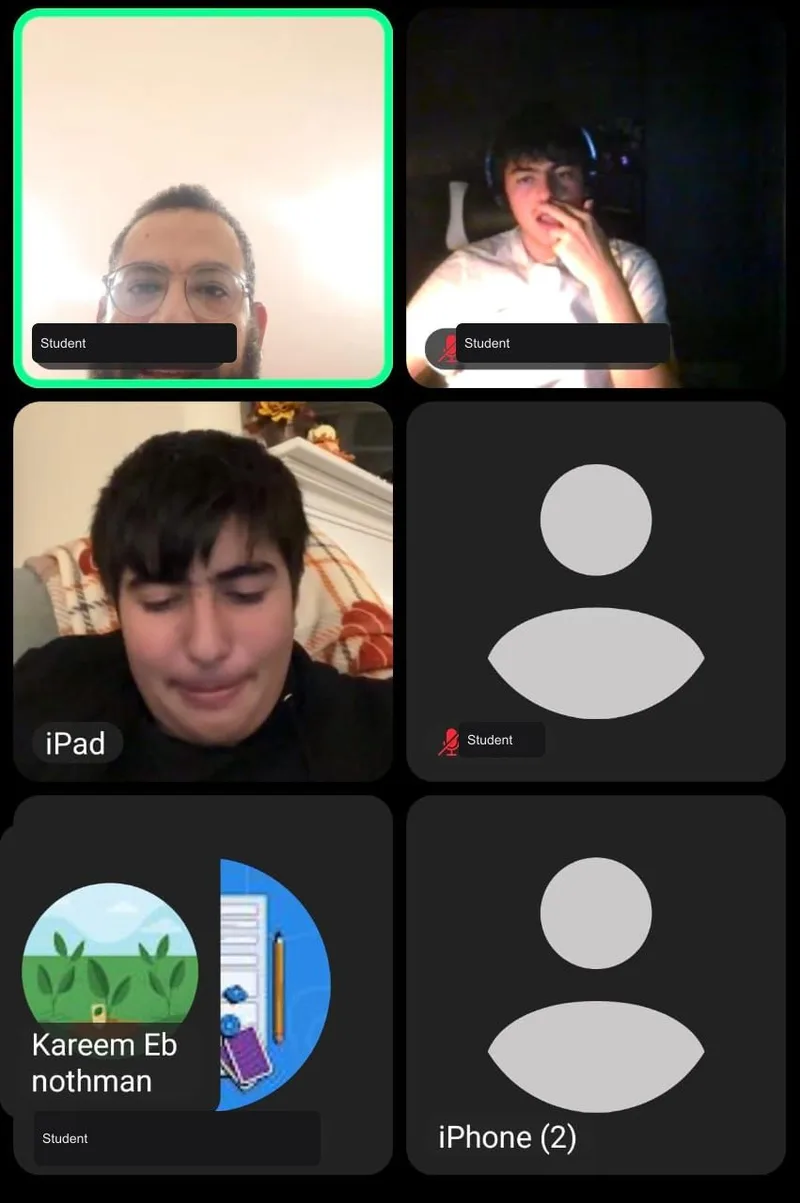
Adults who travel can ask the teacher about scheduling flexibility. If a recurring slot is impossible, a different arrangement may work. The academy’s current rules on rescheduling are on the Student Policy page; read them before committing to a package.
What to tell the teacher in the first lesson
- What you can already do, honestly, including the parts that feel embarrassing.
- What you want to be able to do in three months, even if you are not sure it is realistic.
- How much time you can realistically practise between lessons.
- Whether you prefer English, Arabic or a mix.
- Whether you want to focus on reading, Tajweed, memorization, Arabic or a combination.
- Any past experiences that made you stop, so the teacher can avoid repeating them.
A good teacher will use these answers to propose a plan, not to judge the student. The first lesson is a planning conversation as much as a recitation lesson. Adults who are open about their starting point tend to progress faster because the plan is built for them rather than for an imagined ideal student.
What progress can look like
An illustrative 12-week path for a beginner
This is an example, not a testimonial and not a promise. It shows how a teacher might sequence a beginner’s first twelve weeks if the student attends two lessons a week and practises for about ten minutes on the other days. A real plan will differ after the assessment.
| Weeks | Focus | What the student is working toward |
|---|---|---|
| 1–2 | Assessment and letter sounds | Recognising the Arabic letters, hearing the difference between similar sounds, and settling into the lesson routine. |
| 3–4 | Joining letters and short words | Reading two- and three-letter words with short vowels; correcting the most common articulation errors. |
| 5–6 | First verses and listening | Reading a short verse slowly with the teacher; listening to the same verse daily and imitating it. |
| 7–8 | Tajweed basics in context | Applying one or two rules, such as holding a nasal sound or stretching a vowel, inside a real verse. |
| 9–10 | Fluency and stopping marks | Reading a longer passage with fewer prompts; learning where to stop and continue. |
| 11–12 | Review and first memorization | Revising the reading material; memorizing a short portion with a simple revision cycle; agreeing on the next milestone. |
What the example assumes
The path assumes a complete beginner who can attend two lessons a week and practise on most other days. It also assumes that the student is an older child, teenager or adult who can follow simple instructions. A five-year-old would likely spend longer on the first stage and need more variety. An adult returning to reading might move through the first stage faster but need more time on Tajweed.
The twelve weeks are not a countdown to fluency. They are a sequence for building the habit and the foundation. At the end, the student should have a clearer sense of what they can do, what still needs work, and what the next twelve weeks should focus on.
How the path would change for different students
- A young child: shorter practice, more listening, more repetition, and a parent nearby.
- An adult beginner: faster through the alphabet if they have prior exposure, but more explanation of why each rule matters.
- A student focused on memorization: an earlier start to short portions, with a revision cycle built in from the first week.
- A student focused on Tajweed: more time on articulation and applied rules, with reading fluency developed alongside.
- A student with limited practice time: fewer new items per lesson and more review, so the foundation is not rushed.
What not to infer
Do not infer that twelve weeks is enough to read the whole Quran, memorize a Juz or master Tajweed. Do not infer that a student who takes longer is failing. And do not infer that this is a published academy timeline. It is an example of how a teacher might sequence the work, included here so families can see what a plan looks like before they book.
Further reading
Questions
Frequently asked questions about learning Quran online
These questions come up repeatedly from US families and adult learners. If your situation is different, the trial is the best place to ask a teacher directly.
Can I learn the Quran online completely from zero?
Yes. The academy teaches complete beginners, including adults who have never read Arabic. The trial is used to assess the starting point, and the teacher proposes a plan that begins with letters and sounds rather than assuming prior knowledge.
Do I need to know Arabic before I start?
No. Classes are available in English and Arabic, so a beginner can learn to read the Quran without speaking Arabic first. Learning some Arabic later can deepen understanding, but it is not a prerequisite for reading.
How do I verify a teacher’s Ijazah?
Ask which narration the teacher is authorized in, who authorized them, and whether the document can be seen. The academy publishes its teachers’ Ijazah and Al-Azhar certificate on the Teachers page. A named authorizing teacher and a connected Sanad are the details to look for.
Is online Quran learning effective for children?
It can be, especially in a one-on-one format where the teacher can hear and correct the child directly. Effectiveness depends on a consistent routine, a parent nearby for younger children, and a plan matched to the child’s attention span. The trial is the best way to judge the fit.
Can I learn Tajweed without memorizing the Quran?
Yes. Tajweed is a separate skill from memorization. A student can work on articulation, rules and recitation accuracy using short passages without committing to a Hifz programme. Many students combine both, but neither is a prerequisite for the other.
How much practice should happen between lessons?
The teacher sets the amount after meeting the student. A short daily practice is usually easier to sustain than one long session, and the plan should fit the student’s real week. Ask the teacher what to prioritise on busy days.
What happens if we miss a lesson?
The current rules on cancellations, rescheduling and missed lessons are set out on the Student Policy page. Read them or ask the academy before paying for a package so you know what notice is required and what happens if a lesson is missed.
Should we choose one-on-one or group classes?
One-on-one suits students who need constant correction, a fully personalised plan or privacy while learning. Small groups of up to five can work well for siblings or friends at a similar level and cost less per student. The trial can help you judge which format fits.
A note on sourcing. This guide describes the academy’s published programmes, rates and teacher credentials, and general educational practice. It does not invent student stories, reviews or timelines. Where a detail depends on the owner’s confirmation, the page says so instead of guessing.
Learn Quran online with a teacher who can hear you
Use the free trial to meet a teacher, assess your starting point and leave with a plan. No card is required.
+20 114 616 2847Teachers are based in Cairo, Egypt, and teach online worldwide.